
2021-09-25
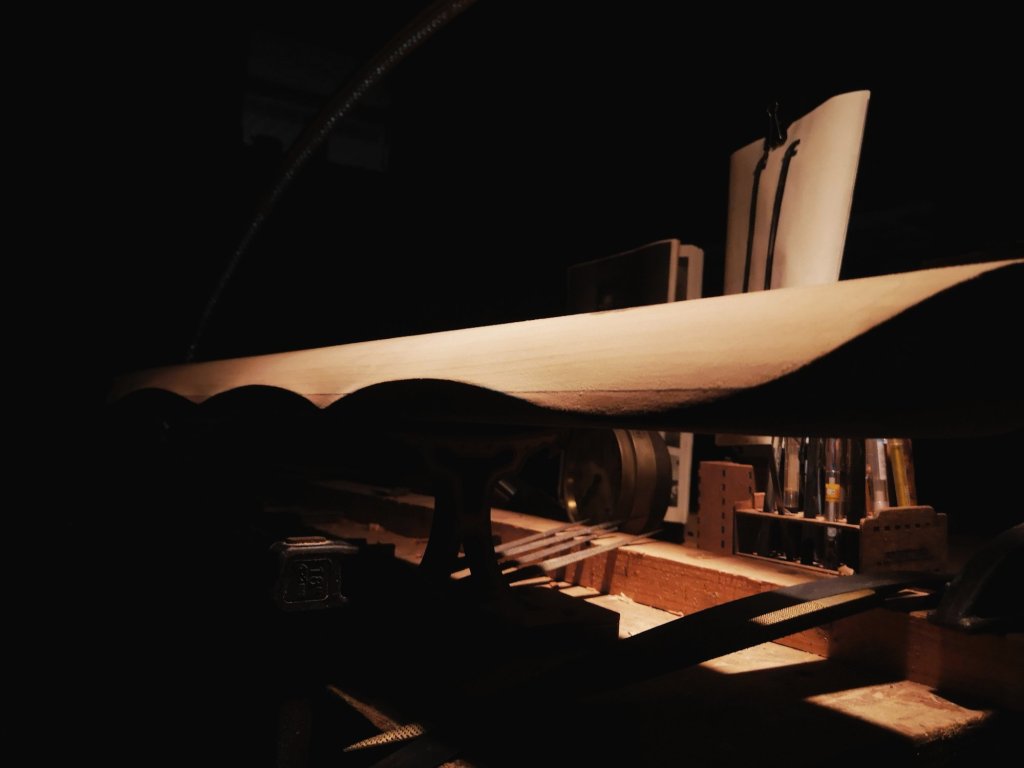
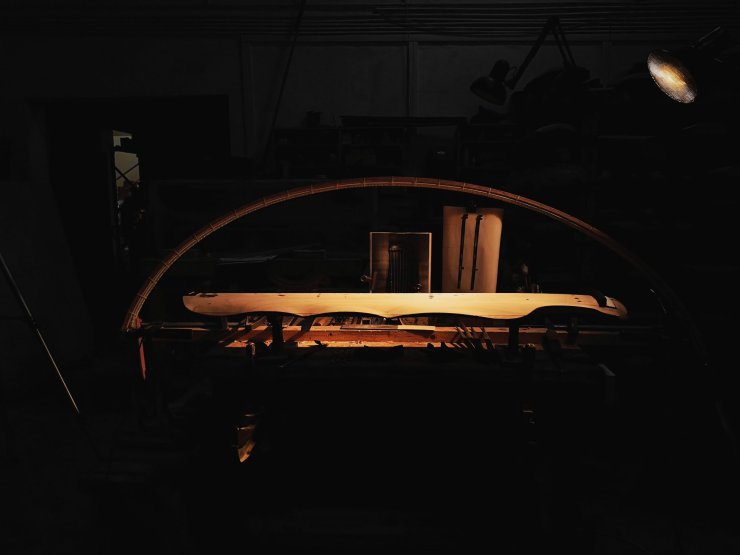
蕉葉琴氣質最終定型
蕉葉琴氣質精修最難處在如何平衡與兼顧形態與音色修改後的大幅改變。所以就需要提早在木胚與調音階段有意識保留足夠的餘量給後期形態微修以及裹布刮灰。
而營造蕉葉琴的氣質,這是意味著最後一次可以修動琴身的形態與動態的機會。在木頭上“定格”來自春夏柔風下的蕉葉,這就需要通過漫長的時日觀察自然植物在一年四季中的生長變化。尤其如何讓渾厚的琴身看起來纖薄柔韌,在每個角度都能感受到洋溢蓬勃的朝氣,這就需要從波浪線條上多加功夫。
如何讓整張琴的曲線與弧面看起来流暢自然,這是一門漫長的美學修為。至於在每一道氣質細修中仍然保持合宜的美感留白與音準餘地,這更是人一生的無盡修為。
The Jiaoye Qin’s final temperament shaping is the most difficult part of how to balance the timbre with drastically change after the shaping modification. Therefore, it is necessary to consciously reserve enough margin in advance at the wood working and tuning stage for the final , cloth wrapping and lacquer-mixture scraping.
And to create the temperament of the Jiaoye Qin, this means the last chance to modify the shape and visual of the Qin body. The “snapshot" on the wood comes from banana leaves under the gentle spring or summer winds, which requires a long period of time to observe the growth and changes of natural plants in the four seasons of the year. In particular, how to make the thick body of the Qin looking thin and flexible, and seem the brimming with life at every angle, it requires think more from the wavy lines.
How to make the curves and arcs of the whole Qin looking smooth and natural is a long aesthetic practice. As for maintaining the appropriate aesthetic “white space" and tone accuracy in each temperament shaping, this is even more the endless cultivation of a lifetime.
 {紫雲古琴斵製技藝坊}The Guqinuthiery & Workshop. Since 2014.