

2021-08-10
蕉葉琴微調與合琴
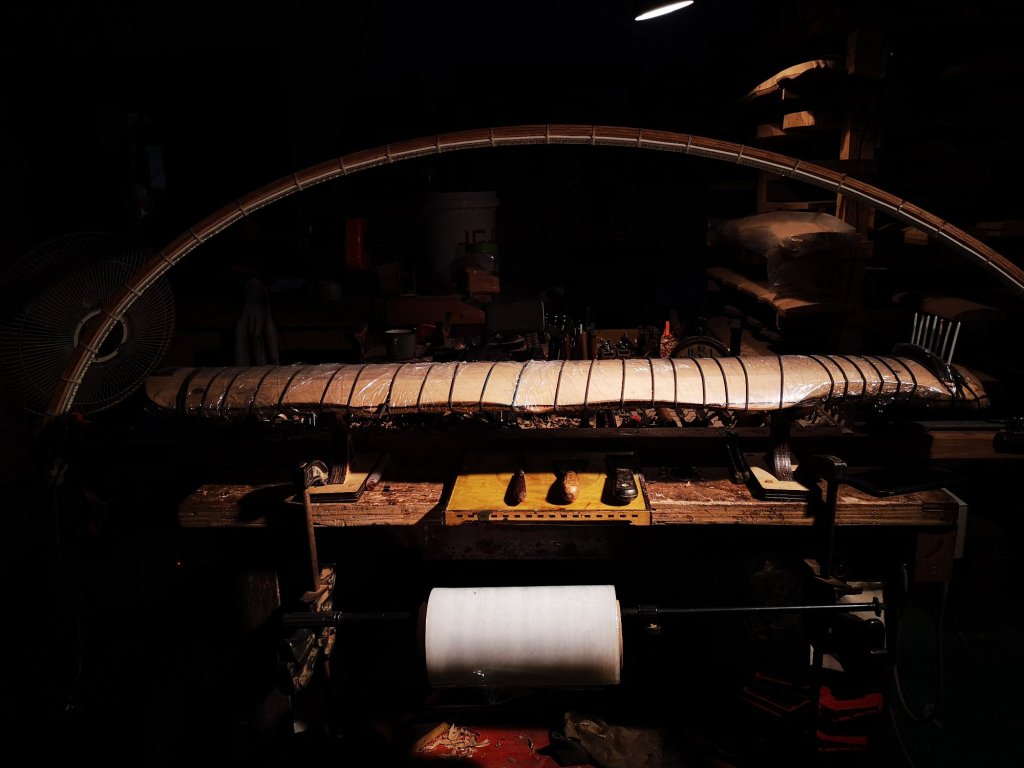
古琴調音工作會穿插交叉於木胚、灰胎、刷漆、上弦四大階段,所以相對於西方弦樂器的吉他與小提琴調音稍微更為繁複。而在古琴調音工作中對音色的微調需要注重其容差範圍,既要準確調控也要保留可調範圍給下一階段,乃至最終古琴完成後進入彈奏以及貯存穩定期,仍然持續在不間斷地進行微調。
而蕉葉琴調音工作既繁複也靈活,由於其波浪式的形態設計也決定了它獨一無二的調音方案。調音工作穿梭於木胚、灰胎、刷漆三大步驟中,對音準進行無數次上下互調並臨界於音準線上。
音準決定了琴音最終的表現張力與性能,更保證了整張琴的七弦十三徽的散音、按音、泛音各部分得以圓融無礙。而琴體的諧振協調性與聲震轉換效率決定了其聲音穿透力、包圍感、聲音傳播距離,更在後期演奏時得以呈現出穩定、甜美、清透、舒爽等令人舒暢悠然的音感。
Fine tuning and soundboard bonding of Jiaoye Qin
The tuning of the Guqin will intersect the four stages of Woodworking, Ash scraping, Lacquer coating, and Winding, so it is slightly more complicated than the guitar and violin tuning of western stringed instruments. In the Guqin tuning work, the fine-tuning of the tone needs to pay attention to its tolerance range. It is necessary to accurately adjust and retain the adjustable range for the next stage, and even the final stage of playing and storage after the guqin is completed, still continuing uninterrupted fine adjustments in accordingly.
The Jiaoye Qin tuning work is both complicate and flexible, and its wavy shape design also determines its unique tuning works. The tuning work through the three steps of Woodworking, Ash scraping, Lacquer coating. The pitch is inter-tuned countless times and is critical to the standard line.
The pitch determines the final tension performance and tone, and also ensures that the harmonic, open string, and stopped sound of seven strings on Qin can be smoothly flow. The resonance coordination and sound-vibration conversion efficiency of the Qin body determine its sound pressure, envelopment, and sound transmission distance, and it can also be sense the sound of stable, sweet, clear, and calmly while playing by later.
 {紫雲古琴斵製技藝坊}The Guqinuthiery & Workshop. Since 2014.