2021-04-03
蕉葉琴整體氣質初修
Jiaoye Guqin’s temperament approximate shaping
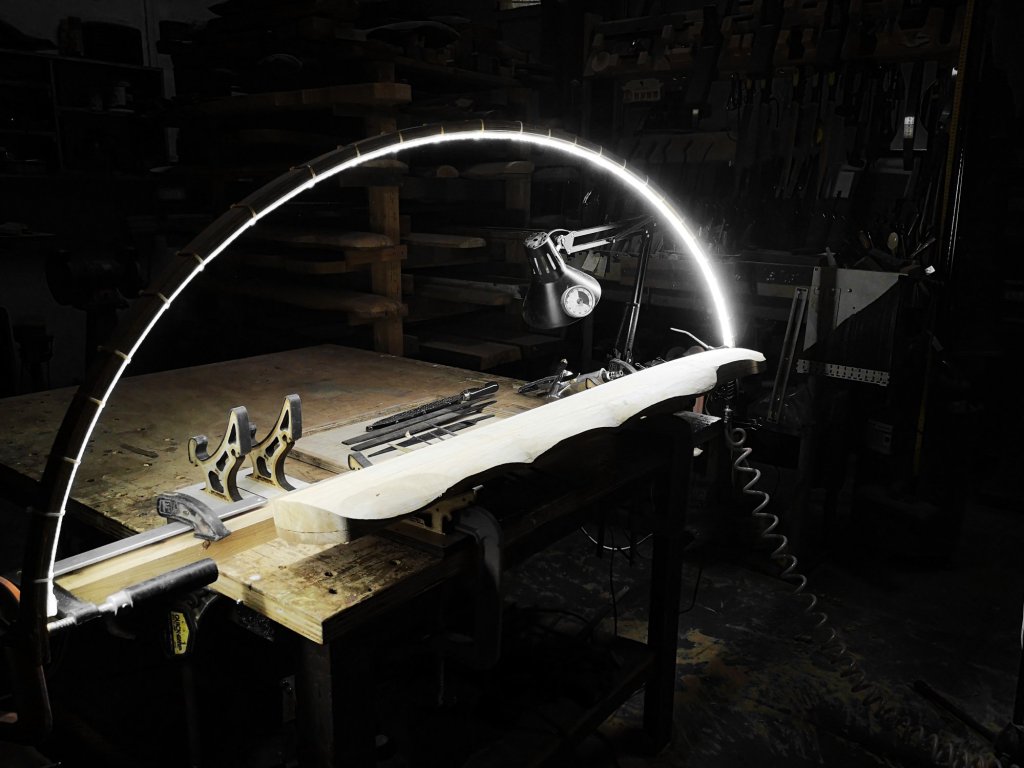
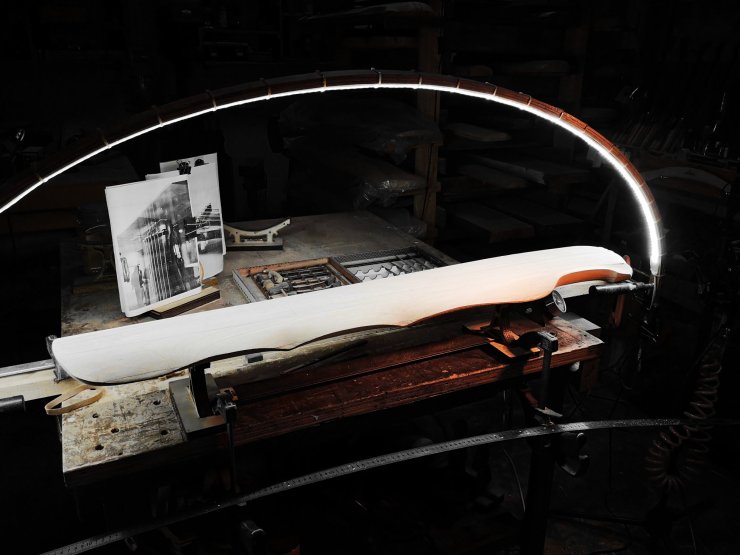
在蕉葉琴進行合琴之前需要進行整體氣質初修,這是因為蕉葉琴雛形會因為面板與底板的乾縮率不一致而產生尺寸和曲線銜接上的誤差。還有在蕉葉琴雛形情況下進行調音也同時引起在外形上的細微變化,而這種細微變化也會導致古琴的弦面夾角產生誤差以及對後期音色產生不良影響。
所以在蕉葉琴合琴以前只能達到整體氣質初修階段,並開始規劃下一步的部分配件鑲嵌。穿插在這一步驟前後的琴腔內部調音工作,是在把控形變與音色的穩定性基礎上進行不斷的磨合,在音色和形變達到相對穩定後才開始進行合琴以及氣質上的細修以及微修。
至於我所強調的形體氣質,最直觀的理解就是在光影過渡里是否能做到自然流暢,而更重要的是能否透發出那種介乎於肥與瘦之間的清秀脫俗感。
The overall temperament of the Jiaoye Qin needs to be shaping in preliminary before the Guqin’s soundboard and backboard was bonded. This is because the prototype of the Jiaoye Qin will cause deviation in the size and curve connection due to the inconsistency of the shrinkage rate of the soundboard and the backboard. In addition, tuning in the prototype of Jiaoye Qin also causes slight changes in the microcosmic, and this slight change will also cause deviation in the angle of the string surface of the Qin and adversely affect the sound.
Therefore, before the Jiaoye Qin was bonded, it can only reach to the preliminary stage of overall temperament shaping, and start to plan some accessories for the next step. The internal tuning work of the Qin cavity before and after this step is to continuously match on the basis of the control deformation and the stability of the tone. After the sound and the deformation reach a relatively stable level, the fine tuning and temperament fine shaping will be follow.
As for the physical temperament I emphasize, the most intuitive understanding is whether the woodworking shape can be made natural and smooth in the transition of light and shadow, but more importantly, whether it can reveal the delicate and refined feeling between fat and thin.
 {紫雲古琴斵製技藝坊}The Guqinuthiery & Workshop. Since 2014.